



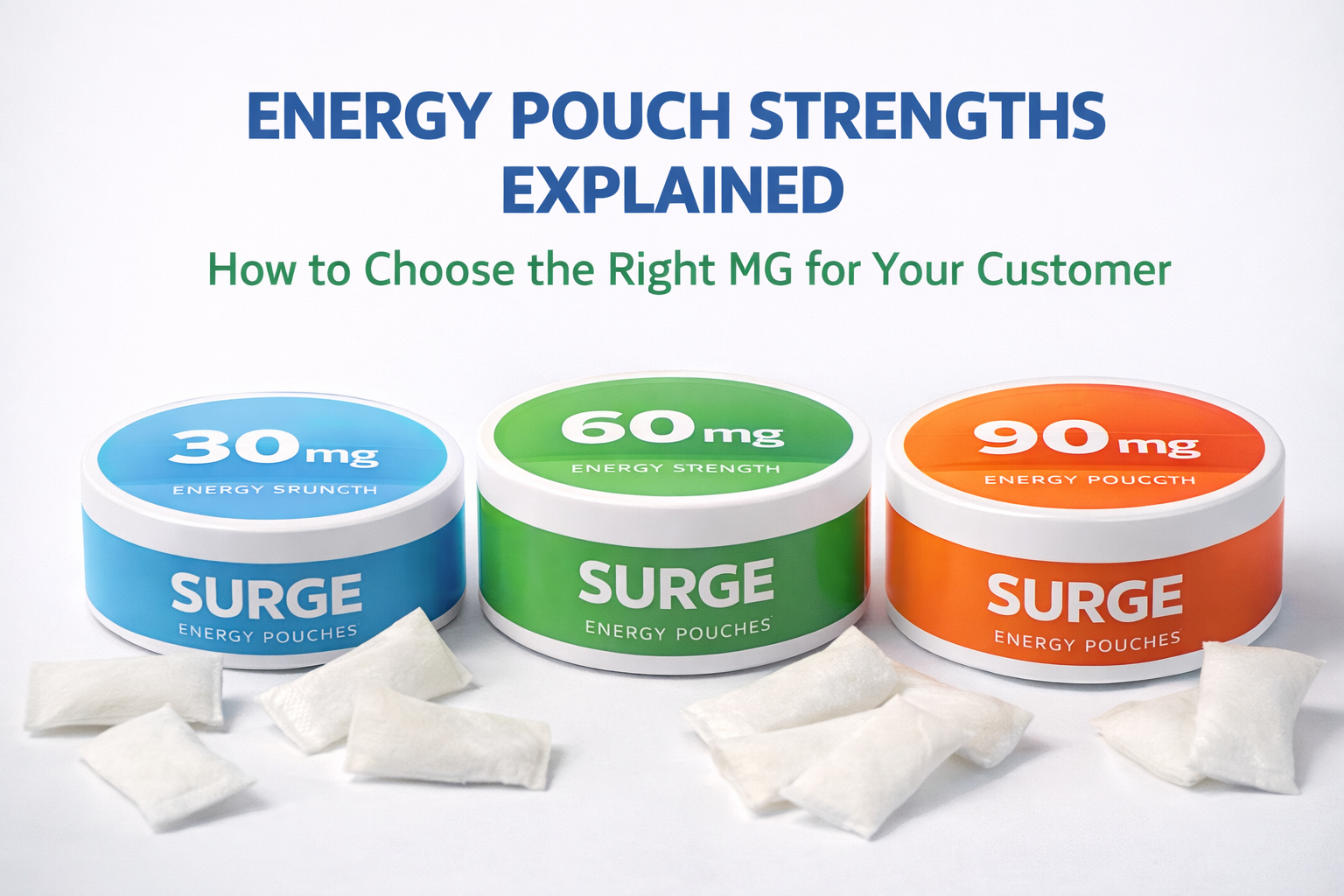
A practical guide to caffeine dosing, product positioning, and building a lineup that actually sells
As the energy pouch category grows, one of the most important — and misunderstood — decisions for brands is caffeine strength. Choosing the right milligram (MG) levels isn’t just a formulation decision; it directly impacts your target audience, brand positioning, and repeat purchase behavior. Get it right, and you create a product customers rely on daily. Get it wrong, and you risk alienating your core market.
What “MG Strength” Really Means
In energy pouches, MG refers to the amount of caffeine per pouch — typically ranging from 20mg to 100mg+. For context, a standard cup of coffee contains roughly 80–100mg of caffeine. That means a single pouch can deliver anything from a light boost to a full energy hit, depending on your formulation.
The key is understanding that customers don’t just want “more caffeine” — they want the right experience. Smooth, controlled energy often wins over harsh, high-dose spikes.
Common Strength Tiers (And Who They’re For)
Low Strength (20–40mg)
Best for new users, casual consumers, or those looking for a light, repeatable boost throughout the day. This tier works well for lifestyle positioning — think wellness, productivity, and everyday use.
Mid Strength (50–75mg)
The sweet spot for most brands. This range delivers noticeable energy without overwhelming the user. It appeals to a broad audience, including professionals, students, and active consumers.
High Strength (80–120mg+)
Designed for experienced users and high-tolerance consumers. This tier is often positioned around performance, intensity, and fast-acting energy. While powerful, it’s important to balance this with smooth delivery to avoid negative experiences.
How to Build the Right Product Line
Most successful brands don’t rely on a single strength — they offer a tiered lineup. This allows customers to choose based on their needs and creates opportunities for upselling and product expansion.
A strong starting lineup might look like:
- 30mg – Daily use / entry-level
- 60mg – Core product / mass appeal
- 90mg+ – High-performance option
This approach mirrors how consumers already think about energy (light → regular → strong) and makes your brand easier to understand at a glance.
Flavor + Strength Pairing Matters
Strength isn’t just about numbers — it should align with flavor and experience. For example:
- Lighter strengths pair well with refreshing, clean flavors (mint, citrus)
- Higher strengths often match bold, intense profiles (berry, coffee, spice)
This creates a more cohesive product experience and helps guide customer expectations.
Positioning Your Brand Around Strength
Your MG strategy should reflect your brand identity. Are you:
- A daily functional brand focused on productivity?
- A performance brand targeting athletes and high-energy users?
- A lifestyle brand blending energy with convenience and flavor?
Your answer determines how aggressive (or balanced) your strength lineup should be.
Final Takeaway
Choosing the right MG levels isn’t about going as strong as possible — it’s about matching your product to your customer. The best brands win by delivering consistent, predictable energy that fits seamlessly into daily routines.
If you build your lineup thoughtfully, strength becomes more than a spec — it becomes a core part of your brand experience.